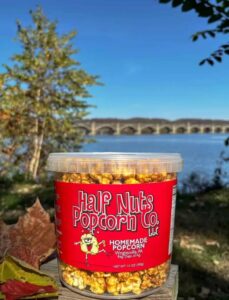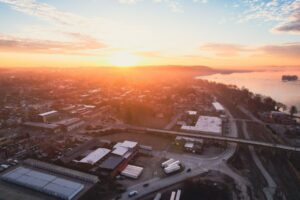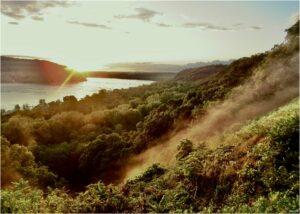
Sit at the John Wright Restaurant today, overlooking the Susquehanna River streaming peacefully in front of you. People around you are eating dinner and engaging in quiet conversation. Boats and kayaks are moving along the water. The historic Columbia-Wrightsville bridge connects to the Columbia side, and Chickies Rock looms to your left.
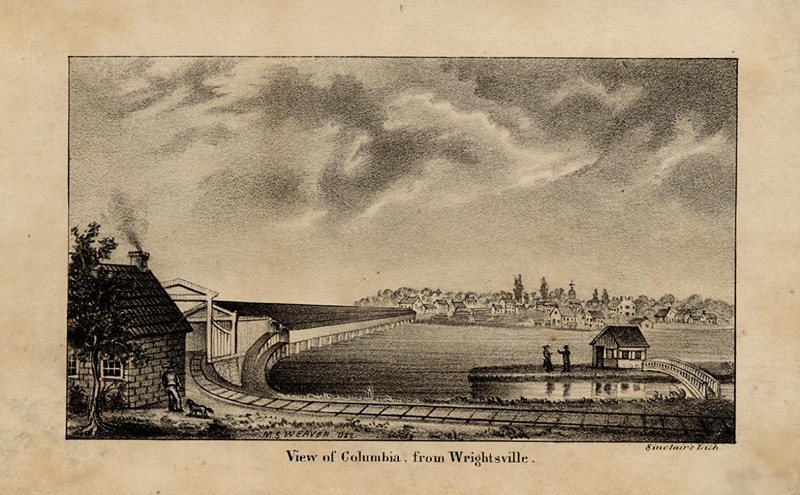
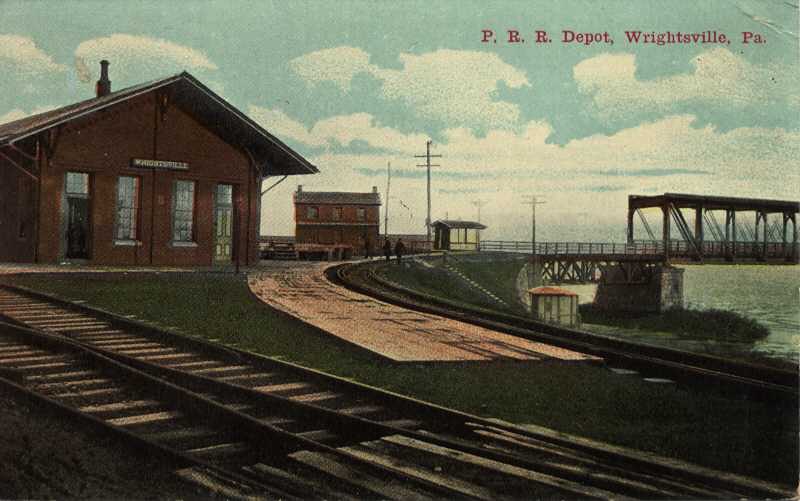
Now you take out your Acme pocket time travel device and set it to 1892. The restaurant and the peaceful scene vanish, replaced by industrial warehouses and railroad tracks that bring in loads of ore, coal, and limestone. Locomotives, freight cars, whistles, bells, and coupling cars create clouds of smoke and noise. Nearby lime kilns are burning the stone. Smoke hangs above the riverfront. Machinery pounds and hisses. At least five lime kilns burn close by, supplied by local quarry operations. Tugboats are bringing canal boats from the Columbia side and connecting south via the Susquehanna and Tidewater Canal to Havre de Grace and then to Baltimore.
Just north along Front Street towers a 65-foot blast furnace. The Aurora Furnace is a mighty industrial presence. Here, men labor in tremendous heat. At night, the furnace still operates, and when it is tapped, molten iron illuminates the works. Aurora was producing roughly 25,000–30,000 tons of pig iron a year.
Back in those days, Wrightsville-like the other River Towns- was an industrial town built around fire. Coal smoke, coal and ore dust, ash, slag, steam, and industrial waste were part of the landscape. Laundry, windowsills, and buildings near the works would have been black from the dust.
The Wrightsville Hardware Company took the raw pig iron and employed between 100 and 200 people to manufacture finished iron goods. Billmeyer & Small Lumber operated a large sawmill to process the lumber floating from Williamsport. As one moved towards the town, several cigar factories mixed with the houses.
Wrightsville’s fortunes were built on geography. For generations, one of the greatest transportation corridors into the American interior crossed the Susquehanna here. The importance of this crossing was demonstrated quickly after John Wright settled what is now Columbia in 1726. By 1730, he was operating a ferry that became so clogged in the coming years that travelers had to wait days to cross. John Wright is the one who petitioned for the creation of Lancaster County- and he also named it.
The technology changed—trail to ferry, wagon road to turnpike, canal to railroad—but the corridor remained.

In 1834, the 82-mile Philadelphia & Columbia Railroad opened between Philadelphia and Columbia—one of the country’s earliest major railroads and Pennsylvania’s first major railroad. It was part of Pennsylvania’s extraordinarily ambitious Main Line of Public Works, connecting Philadelphia with Pittsburgh through a combined railroad-and-canal system. The River Towns were–briefly–at the leading edge of the industrialization of transportation.
This tied all three towns together into a uniquely integrated industrial unit. Columbia was the dominant transportation, finished goods, and warehousing hub; Marietta developed a particularly strong riverfront industrial economy; and Wrightsville provided its own industrial inputs as well as connecting the system westward toward York and southward through the Tidewater Canal to Baltimore.
In its day, the three River Towns were integrated into one of the earliest, most developed inland industrial distribution nodes in the country. Its fortunes were on the rise. In Wrightsville, places such as the Union Hotel, McLaughlin House, and Railroad House gave space for travelers, railroad workers, salesmen, boatmen, and other transient traffic.
This is also the reason during the Civil War that the Confederates approached the Columbia-Wrightsville covered bridge to gain access to Pennsylvania. The dramatic burning of the bridge prevented that, ensuring that the armies tangled at the fateful Gettysburg engagement.
Aurora Furnace was part of a network of multiple furnaces stretching from Marietta to Columbia. As a relative latecomer (1867), Aurora was taking advantage of the massive amounts of anthracite coal, ore, and other materials for the furnace that were already arriving by canal, train, and wagon.
But the River Towns did not remain an important industrial presence forever. For the transportation revolution that had created the River Towns’ industrial advantage did not stop. Railroads increasingly bypassed the old canal-and-river transfer system. The canals declined and eventually closed. Pennsylvania’s iron industry consolidated around larger, more efficient operations. The dynamic energy of American development moved further west. One by one, the industries that had crowded the riverfront disappeared.
The Aurora Furnace became derelict. In 1916, the bricks were repurposed to build a warehouse that housed various operations over the years, including a silk mill. The last furnace went silent.
But there is another story here. For the greatness of America’s past also has its dark side. Resources were extracted in a mad rush for profit until there was nothing left. Entire ecosystems across the state were destroyed. The place of “Penn’s Woods” was clearcut. Men and women were often treated as expendable commodities designed to maximize profits for owners who prioritized greed over humanity. There was no safety net for bodies that grew old or got sick or hurt.
But we have learned from the imbalances of those times.
In 1988, the John Wright Restaurant opened and went through various expansions to become the establishment that it is today. Other businesses have opened and created a thriving small town that is clean and bright with promise. The forests are returning, as have the animals and ecosystem created to inhabit them. Today, we are more aware that we share this world with all the profusion of life that was created to inhabit it.
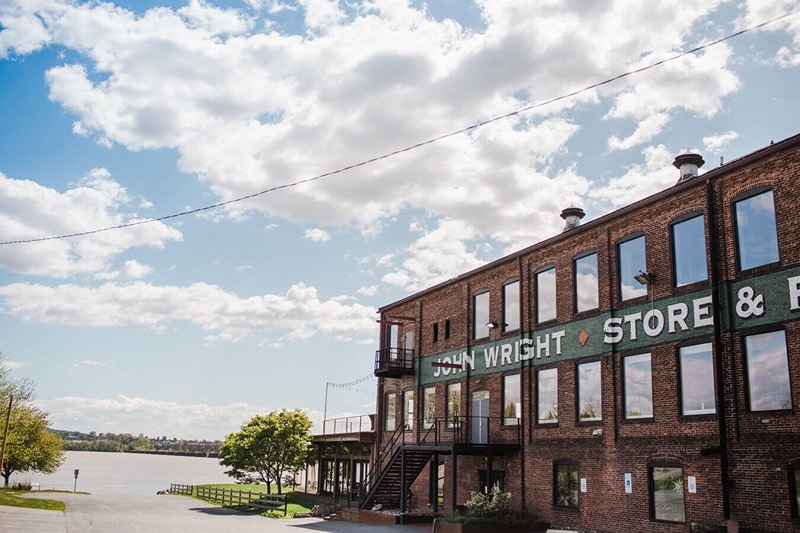
And so we have returned to the 20th century. As we gaze across the placid river, we don’t see the glow of tremendous furnaces churning out black smoke boiling from the two Chickies Rock Furnaces, from Columbia, from steam engines puffing by, from the Aurora and other operations.
But the bricks that make up the John Wright Restaurant are one reminder.
The great irony of the River Towns is that for nearly two centuries, their fortunes rose because this was a place where America had to stop—to cross the river, transfer freight, change transportation systems, process raw materials, and send them onward.
Eventually America learned how to pass straight through.
Today, as the River Towns reinvent themselves around history, recreation, tourism, and the Susquehanna itself, they are asking people to do something here again:
Stop awhile.